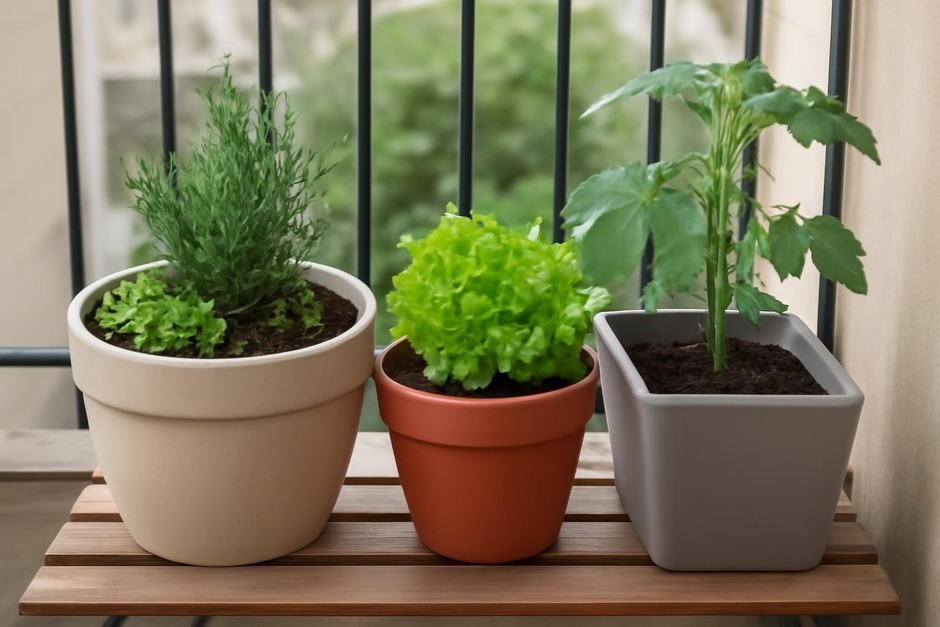
Designing Small Container Systems That Reduce Work: Principles and Mini Setups
Observation: When a tiny balcony or patio becomes a full-time project, the problem is often not the plants themselves but the systems behind them. Small choices in container size, soil, plant pairing, and layout add up to either constant fuss or quiet resilience. The goal of design is to shift work from constant reaction to a few predictable, easy actions.
1. Principle — Pick the right volume: work scales with soil
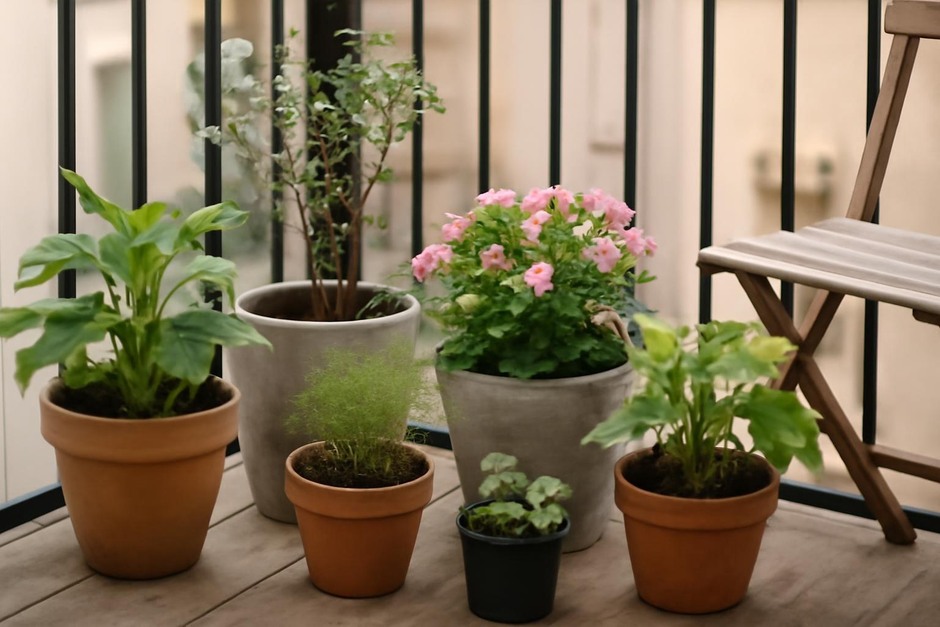
Soil volume controls two things at once: how long it holds water and how much root space plants have to access nutrients. Too little volume means frequent watering and shallow roots; too much volume in a flimsy pot can sit cold and wet. For small gardens, choose containers sized to fit the season and the plant’s habit.
Mini setup: The three-tier volume rule
- Herbs and small annuals: 3–5 liters. Fast-draining mix, grouped so you can water together.
- Mixed planters or larger perennials: 8–15 liters. Deeper mixes buffer dry spells and reduce re-pot frequency.
- Small shrubs or bush tomatoes: 20+ liters. Gives roots room to buffer heat and nutrient swings.
Example: A 5-liter pot for basil will need daily checks in midsummer, while an 8–12 liter planter with the same basil plus chives will survive two–three days without attention. The difference is not glamour but the time you buy back.
2. Principle — Make moisture work for you: storage, exchange, and access
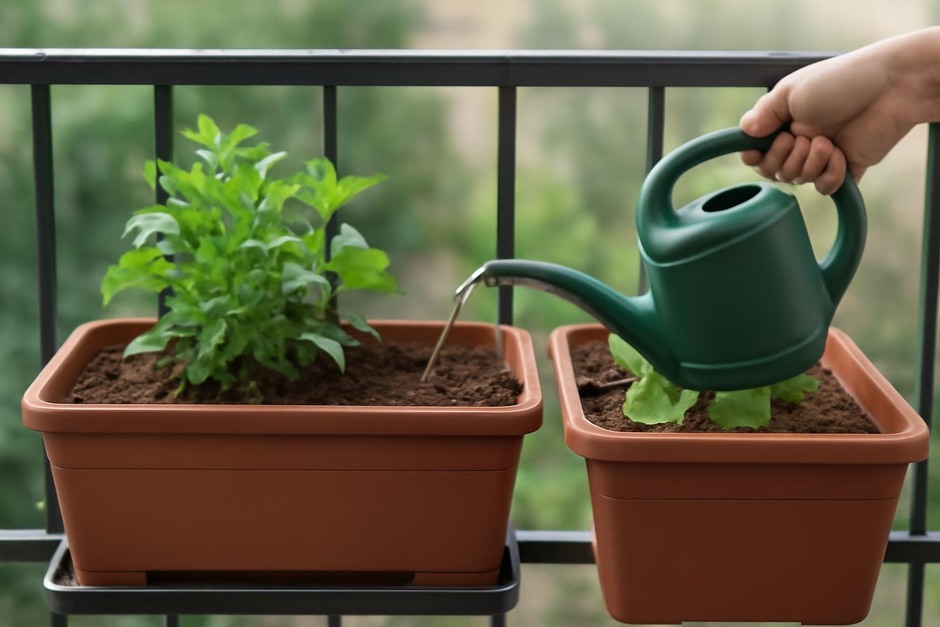
Moisture control isn’t just about watering frequency; it’s about creating a small bank of usable water and reducing evaporation. That happens through texture of the potting mix, surface cover, and container material.
Mini setup: Moisture-saving trio
- Use a mix with some organic matter and a mineral fraction (coarse compost + perlite/pumice) to store water yet remain airy.
- Top with a thin mulch layer—gravel for shallow-rooted herbs, shredded bark for deeper mixes—to slow surface drying.
- Prefer ceramic or thicker plastic for sunny spots; thin plastic and metal heat up quickly and dry faster.
These choices change how often you water, not whether you water. In practice, a mulched, higher-volume pot can cut watering visits from daily to every 3–4 days in summer.
3. Principle — Combine plants to buffer microclimates and needs
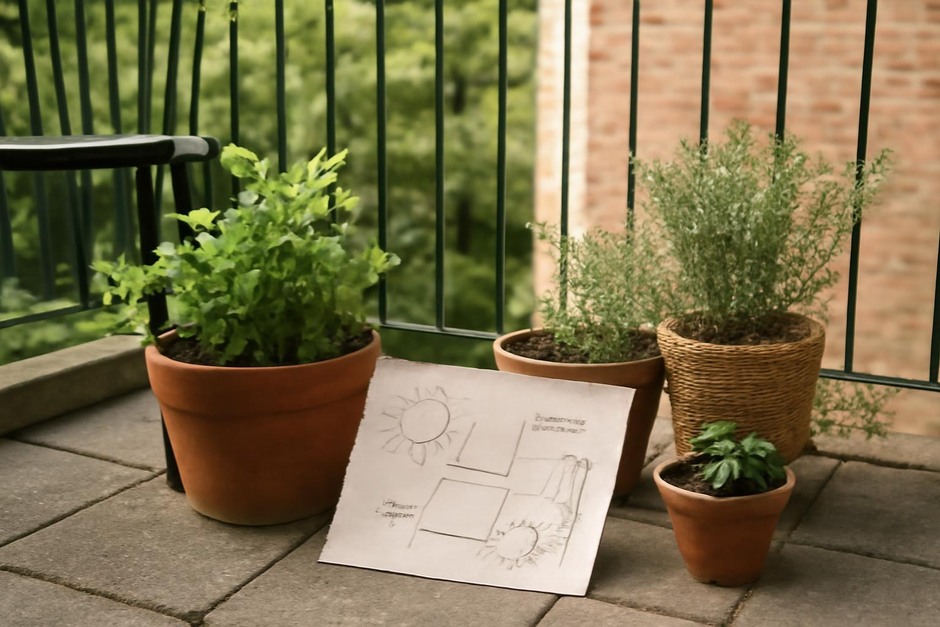
Thoughtful combinations reduce stress for every plant in a container. Pairing plants with complementary water needs, root depths, and light tolerance creates a mini-ecosystem where neighbors help each other resist drought and sun scorch.
Mini setup: Layered companion pocket
- Anchor: one medium-rooted plant (e.g., rosemary or dwarf lavender) that prefers steadier conditions.
- Fill: lower-growing companions with similar light needs but faster life cycles (e.g., thyme, creeping oregano).
- Edge: a sacrificial annual (e.g., calendula or a gentle lettuce) that benefits from the shade and gives color.
Combination principle: match the anchor’s watering rhythm and let faster plants take the quicker swings. Avoid pairing a thirsty lettuce with a drought-tolerant rosemary in the same pot—different rhythms create more work.
4. Principle — Design for modular maintenance and simple choreography
Instead of random chores, set a small weekly rhythm and design pots so each action solves multiple problems. Modular containers—pots that you can move, swap, or replace without disturbing the rest—make targeted fixes simple.
Mini setup: The maintenance circuit
- One weekly check: tilt a sample pot to assess moisture and look for pests—10 minutes for the group.
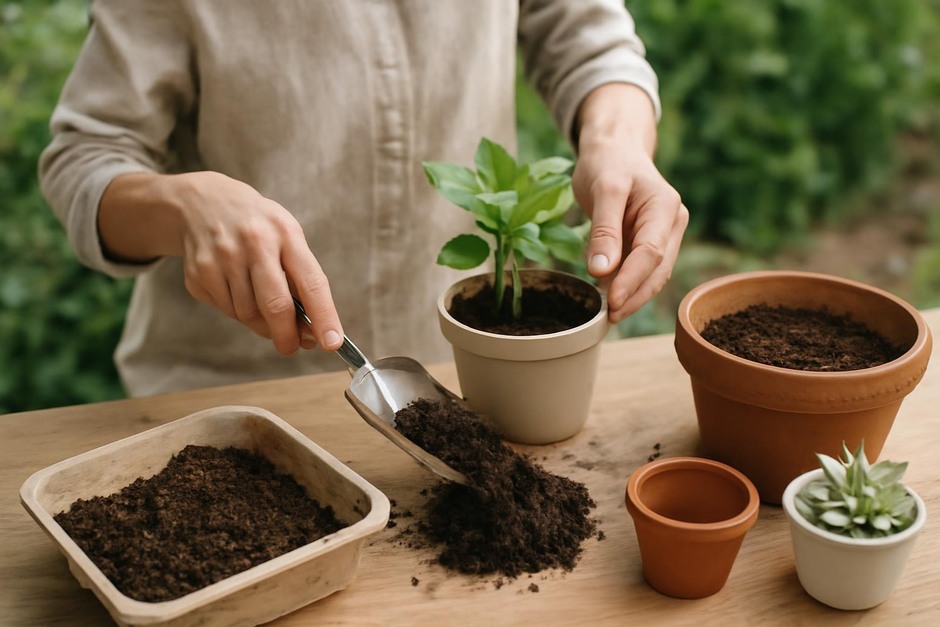
- One scheduled swap: every two months, refresh the top 2–3 cm of mix in high-use pots to replenish nutrients without full repotting.
- One seasonal move: modular pots on trolleys or trays can be shifted for sun or sheltered for cold snaps, avoiding last-minute salvages.
By planning small, repeatable actions you prevent large, stressful ones. Use the smallest possible intervention that achieves the goal: prune a leggy stem instead of replanting; top-dress rather than full repot.
Conclusion
Measured design reduces work more than any single trick. Match container volume to plant needs, build a soil that stores usable moisture, pair plants that share rhythms, and set a simple maintenance choreography. Each principle is easy to test: try one redesigned pot this month and watch how much time it saves over the season. Small experiments lead to clearer preferences and a garden that needs you less often—without asking you to stop caring.