Build a Reliable Watering Instinct: Five Small Experiments for Container Gardeners
One of the most useful skills for small-space gardeners is learning when a container truly needs water. Automated rules of thumb often fail because pot size, mix, plant type, sun, and wind change how quickly a container dries. This short field guide walks you through five small experiments you can run in your own containers. Each experiment focuses your observations and builds a reliable, practical watering instinct.
What you need and how to set up
Materials are minimal: a few identical pots (or a single pot you observe over time), a moisture meter or a wooden skewer (optional), a marker, a simple kitchen scale (optional), and a notepad. Use a representative plant—a common herb, annual, or houseplant—and a potting mix you normally use. The experiments take place over several days to a few weeks depending on sun and season.
Experiment 1: The Lift Test — noticing dry vs. wet weight
Goal
Develop a sense for how the pot “feels” when wet and when dry.
Setup
- Thoroughly water the pot until water drains from the drainage hole. Let it drain and settle for 30 minutes.
- Lift the pot and notice its weight and how it feels in your hands. Mark this as “wet” on your notepad.
- Leave the pot to dry in its usual location. Lift it at intervals (every 12–24 hours) and note when it feels distinctly lighter; mark that as “dry.”
Observation and interpretation
You’re training muscle memory for a weight range. When you later lift similar pots, that remembered weight can tell you whether to water without probing the soil.
Experiment 2: The Touch & Skewer Test — surface vs. depth
Goal
Compare surface dryness to moisture deeper in the root zone.
Setup
- After an initial full watering, press your finger into the mix to the second knuckle and note the feel.
- Insert a wooden skewer or chopstick to the bottom and leave it 10 minutes. Remove and note how damp the skewer is.
Observation and interpretation
In many mixes the surface looks dry long before the root zone is dry. Use the skewer or a moisture meter to avoid shallow, premature watering.
Experiment 3: The Timing Trial — how long between wets
Goal
Estimate realistic watering intervals for that plant in that pot and location.
Setup
- Water fully, then track daily using the lift and skewer tests. Record the day when both weight and skewer indicate dry.
- Repeat under different conditions: after a windy spell, on a cloudy week, and when the plant is actively growing.
Observation and interpretation
You’ll build a small table in your head: this pot dries in X days in sun, Y days in shade, Z days in wind. Use that as a baseline rather than a fixed schedule.
Experiment 4: The Leaf-Response Check — plant cues that follow soil moisture
Goal
Link plant behavior to soil state so you can read living signals.
Setup
- When the pot is near the dry mark, watch leaves for subtle changes over a 24–48 hour period: loss of turgor, drooping, leaf curl, slowed growth.
- Water and note how quickly leaves respond. Some plants recover fast; others lag.
Observation and interpretation
Plants that show fast, reversible droop are good indicators; those that hide stress until it’s severe are less helpful. Pair plant cues with the earlier tests for reliable decisions.
Experiment 5: The Repeatability Check — practice across pots and seasons
Goal
See how consistent your new instinct is across other pots and times of year.
Setup
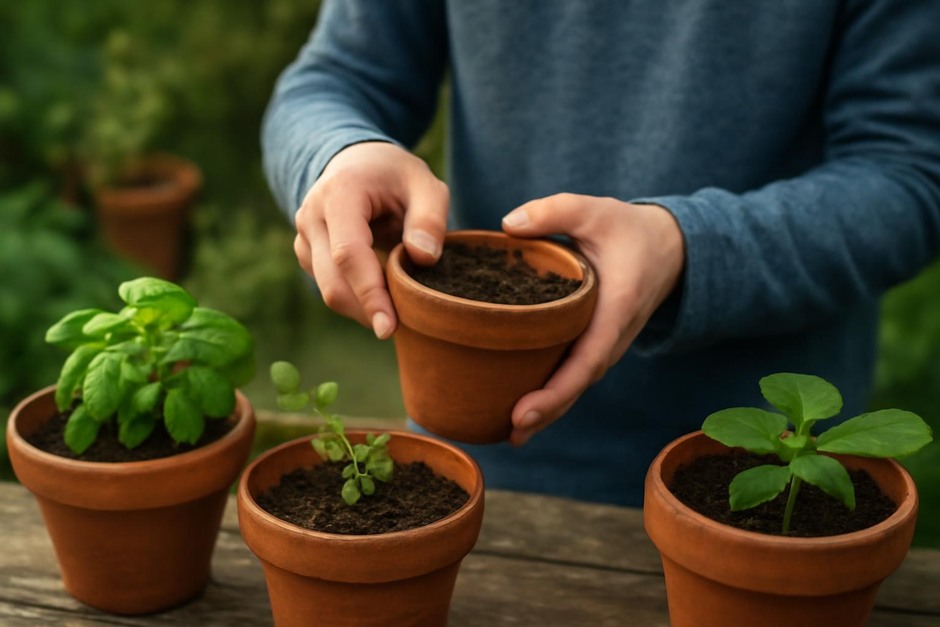
- Apply the lift, skewer, and leaf checks to at least two other containers: one larger, one smaller, or one with a different mix.
- Record differences and adjust the weight memory and timing rules accordingly.
Observation and interpretation
The weight difference between a wet and dry small pot is smaller than for a large pot. Seasonal changes (cooler air, lower light) will lengthen intervals. Over time you’ll learn quick adjustments rather than rigid rules.
Putting the experiments together
After completing these small trials, you’ll have three tools to use together: a lifted-weight memory, a quick depth check (skewer or meter), and plant cues. Use them in that order: lift first, probe when unsure, and trust plant behavior as confirmation. Keep brief notes for a month; patterns will emerge.
These experiments are low-effort and repeatable. They help you replace uncertainty with observed patterns so you can water sensibly for each container’s real needs rather than a calendar or anxiety. The skill you build—sensing moisture by observation and touch—is one that saves time, water, and plant stress across seasons.