Layering and Mixing: A Step-by-Step Method for Stable Container Soil
Good container soil performs three jobs at once: it drains excess water, holds enough moisture between waterings, and keeps pore space for roots to breathe. In small pots every change matters more than in the ground, so a deliberate layering-and-mixing method helps you control those functions with minimal materials.
Step-by-step method: build a balanced container soil (example: 8–10 inch pot)
-
Gather supplies.
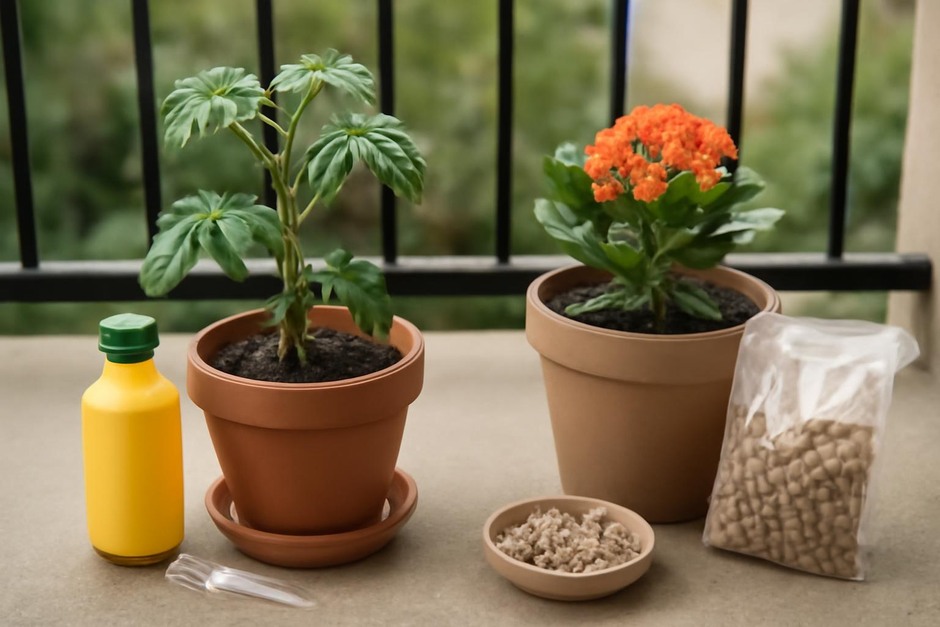
For an 8–10 inch pot you’ll need: 3 parts high-quality soilless potting mix, 1 part coarse perlite or pumice, 1 part compost (well-aged), and a small handful of slow-release organic granular or crushed eggshells if desired. Have a trowel and a clean container for mixing.
-
Prepare the container.
Make sure drainage holes are clear. If the pot lacks holes, add a few near the base. Skip the common idea of filling the bottom with gravel; it often only raises the perched water table. Instead, protect the holes with a bit of landscape fabric or a coffee filter to stop fine mix from washing out.
-
Create a loose drainage layer (optional shallow buffer).
Place a 1/2 inch layer of coarse material—broken terracotta, coarse grit, or larger perlite—directly over the hole if you worry about rapid washout. This is a thin buffer, not a deep gravel layer.
-
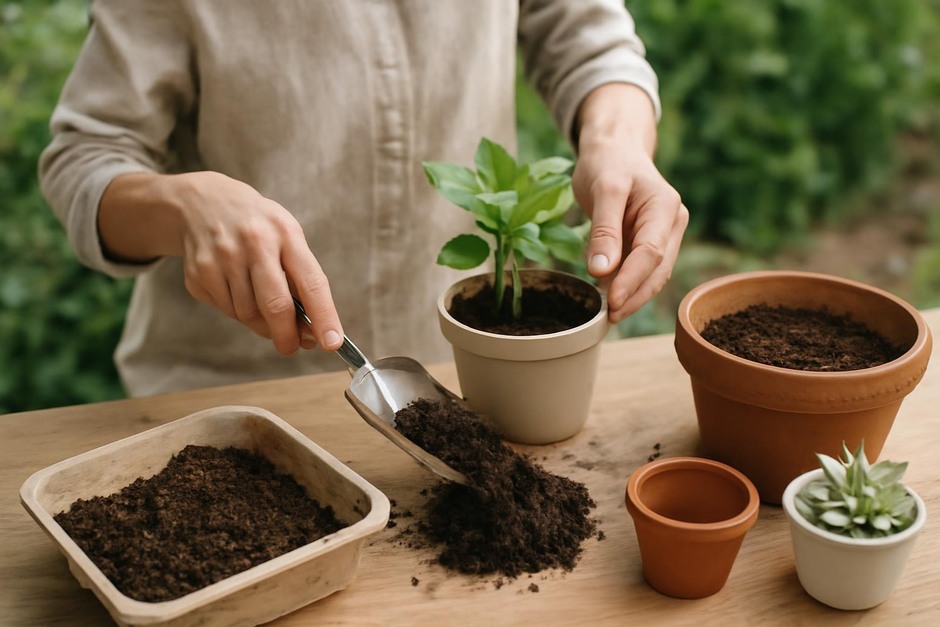
Mix the main potting blend.
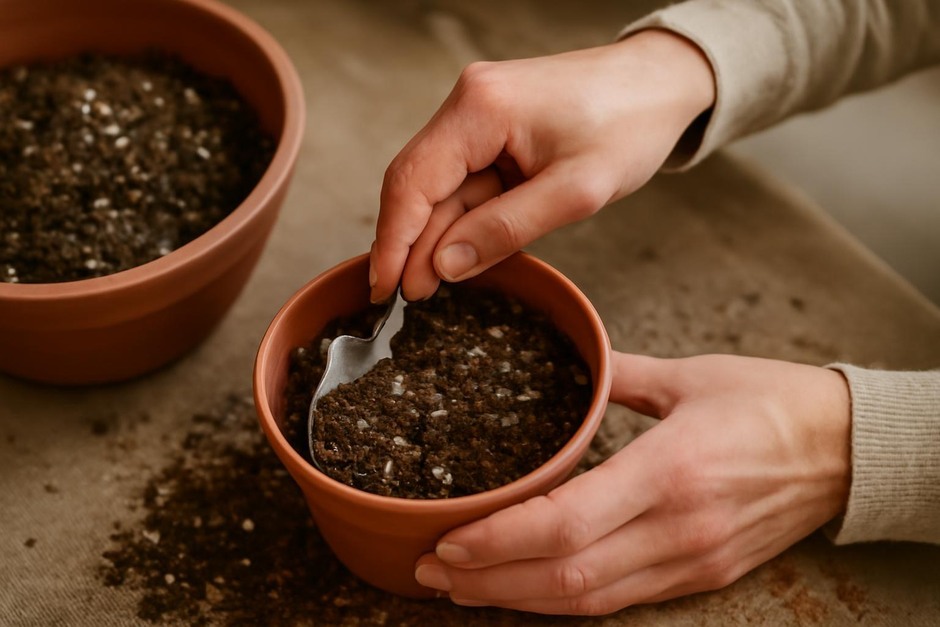
Combine the 3 parts potting mix with 1 part perlite/pumice and 1 part compost in your mixing container. Work them together until uniform. The potting mix provides structure, perlite adds aeration, and compost supplies a steady nutrient base and improves water retention modestly.
-
Fill and shape the soil.
Fill the pot about two-thirds full and tamp lightly—just enough to remove large air pockets but not compact. Set the plant so the root crown sits about 1 inch below the pot rim when you add final soil. Finish filling and gently firm the surface.
-
Top dressing and initial watering.
Apply a 1/4 inch mulch of fine bark or compost to reduce surface evaporation for larger pots—skip or reduce this in very small pots where mulch can hold too much moisture. Water thoroughly from above until water drains freely from the holes, then let the pot sit to drain completely.
-
Observe and adjust.
Monitor the first week. If the mix stays soggy for days, add more perlite next time or select a coarser potting mix. If it dries within a day, the blend needs more compost or a water-retentive amendment like coconut coir.
Variations for common small-container situations
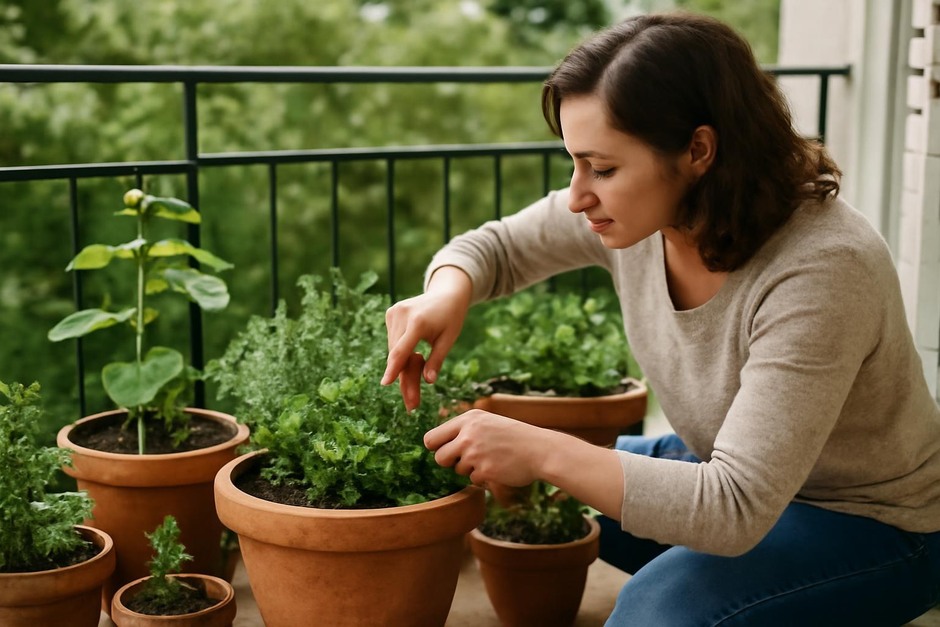
Herb pots (6–8 inch)
- Use 2 parts potting mix to 1 part compost and 1 part perlite. Herbs like basil and parsley prefer mixes that dry slightly between waterings; reduce compost if you find them too wet.
Succulents and cacti (small shallow pots)
- Use 2 parts coarse mineral-based mix (cactus mix or chunky perlite/pumice) to 1 part potting mix. Keep compost minimal. Aim for fast drainage and more air space.
Annual flowers in window boxes
- Increase compost slightly (1.5 parts compost to 3 parts potting mix) for steady feeding over the season, and incorporate a small slow-release organic fertilizer in the mix.
Plants in humid or rainy climates
- Choose coarser drainage (more perlite/pumice) and avoid heavy mulches that trap moisture. Consider elevating pots on feet to improve airflow under the saucer.
Troubleshooting: quick fixes for common problems
Problem: Soil stays waterlogged for days
- Cause: Too fine a mix, compacted soil, or insufficient drainage holes.
- Fix: Repot into a coarser blend (add perlite/pumice), ensure holes are clear, and reduce mulch thickness. If root rot is suspected, trim affected roots and repot into fresh mix.
Problem: Soil dries out within a day
- Cause: Mix too sandy or too much airflow for pot size.
- Fix: Add more compost or coconut coir to increase moisture retention, or move the pot to a slightly shadier spot. Consider grouping pots to create mutual humidity.
Problem: White crust or salt buildup on surface
- Cause: Mineral salts from tap water or excess fertilizer.
- Fix: Flush the pot thoroughly with water occasionally, reduce fertilizer rate, and scrape off the top inch of soil and replace with fresh mix when buildup is visible.
Problem: Roots circling and bound in small pots
- Cause: Plant has outgrown its pot.
- Fix: Repot into the next pot size with fresh mixed soil. For perennials or herbs, tease roots gently and trim very long circling roots before repotting.
These steps link the principle—balance between drainage, retention, and aeration—to small, practical choices you can make for specific plants and conditions. Start with the simple blend, observe how a particular pot behaves, and make small adjustments on the next repotting rather than overcomplicating the first try.